Heterogeneous Integration and Thermal Limits: The Next Wave of Semiconductor Scaling
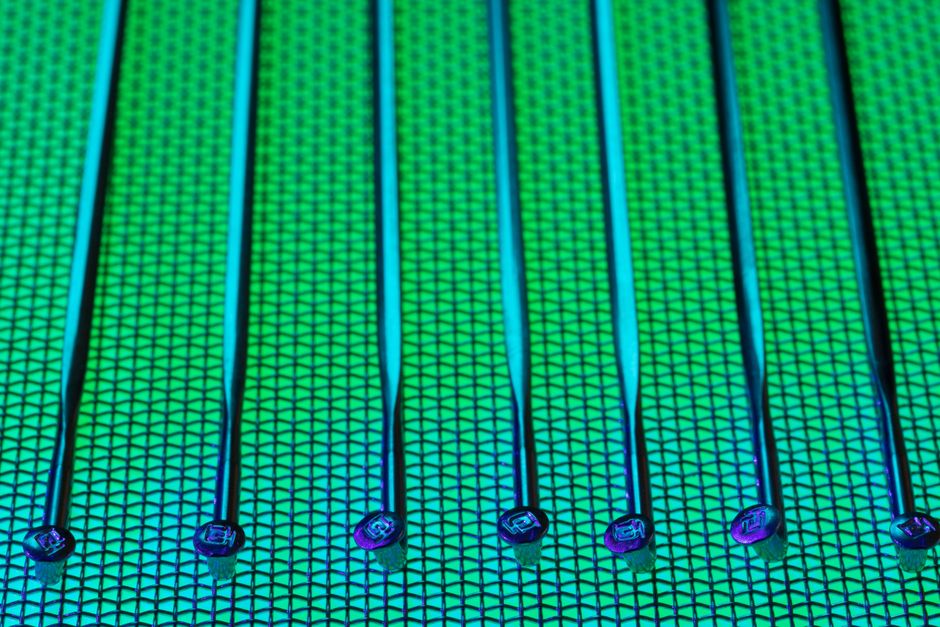
For decades, the semiconductor industry relied primarily on strict planar scaling—shrinking transistors on a single monolithic piece of silicon—to drive computing performance forward. As lithography approaches physical boundaries defined by atomic limits, traditional Moore's Law progression has slowed significantly. In response, Korean semiconductor foundries and global OSAT (Outsourced Semiconductor Assembly and Test) providers are shifting focus from pure transistor miniaturization to advanced packaging and heterogeneous integration. This paradigm shift redefines how modern processors are built, cooled, and interconnected, offering a sustainable path for high-performance computing, AI accelerators, and mobile application processors.
The Physical Limits of Monolithic Scaling
As nodes progress toward the sub-2nm thresholds, manufacturers face severe thermodynamic and quantum mechanical challenges. Quantum tunneling increases current leakage, while extreme ultraviolet (EUV) patterning becomes exponentially more expensive and complex. Furthermore, building a massive monolithic die for high-performance workloads creates significant yield risks; a single microscopic defect can render an entire large-scale die unusable. Industry data from leading memory and logic manufacturers indicate that the cost per transistor has largely plateaued, signaling the end of the era where shrinking alone guaranteed economic and performance returns. Consequently, engineers must look beyond the single-die approach to sustain generational compute gains.
The Rise of Heterogeneous Integration and Chiplet Architecture
Heterogeneous integration addresses these scaling limitations by decomposing a monolithic processor into smaller, specialized functional units known as chiplets. Instead of manufacturing the entire system on a single, expensive advanced node, manufacturers can produce CPU cores, I/O controllers, and specialized accelerators on the most cost-effective and appropriate process nodes. These chiplets are then interconnected on a common substrate. For instance, high-speed memory interfaces can remain on a mature node, while compute-heavy logic utilizes the latest sub-3nm processes. This modular methodology drastically improves manufacturing yields, reduces overall production costs, and accelerates time-to-market for complex silicon designs.
Advanced Packaging Technologies: 2.5D, 3D, and Interposers
Connecting separate chiplets requires packaging innovations that match the bandwidth and latency of traditional on-die wiring. Traditional wire-bonding is entirely insufficient for high-density architectures, prompting widespread adoption of 2.5D and 3D packaging techniques. In 2.5D packaging, chiplets are placed side-by-side on a silicon interposer, which provides high-density routing paths. Moving to true 3D integration involves stacking dies vertically, directly connecting them via Through-Silicon Vias (TSVs) and micro-bumps. This vertical stacking drastically shortens interconnect lengths, reduces electrical resistance, and enables immense memory bandwidth—a critical factor for memory-bound artificial intelligence training and inference workloads.
Thermal Management and Power Delivery Challenges
While advanced packaging unlocks unprecedented performance densities, it introduces formidable engineering hurdles, particularly regarding thermal dissipation and power delivery. Stacking multiple active dies traps heat in localized areas, raising junction temperatures and threatening long-term device reliability. Additionally, delivering stable, low-voltage power through multiple vertical layers requires sophisticated backside power delivery networks (BSPDN). Engineers are actively deploying novel thermal interface materials, microfluidic cooling channels, and advanced substrate designs to manage heat dissipation effectively. Without these thermal and electrical breakthroughs, high-density chiplet assemblies risk thermal throttling that negates their raw performance advantages.
The Future Ecosystem: Standards and Industry Collaboration
The transition toward chiplet-centric designs requires unprecedented ecosystem collaboration. Unlike closed monolithic architectures, heterogeneous packaging relies heavily on standardized die-to-die interconnect interfaces, such as the Universal Chiplet Interconnect Express (UCIe) standard. Standardization allows fabless designers to mix and match modular components from different foundries and IP vendors. As the industry moves forward, success will depend not solely on raw manufacturing prowess, but on robust design ecosystems, standardized testing protocols, and collaborative supply chain partnerships that span materials science, EDA tool development, and final assembly.
Advanced Packaging Evaluation Checklist
- Assess the workload requirements to determine if chiplet decomposition offers a genuine yield or cost advantage over monolithic designs.
- Evaluate interposer and substrate options (such as silicon, organic, or glass) based on thermal expansion coefficients and signal integrity needs.
- Verify compatibility with open industry standards like UCIe to ensure flexibility in multi-vendor supply chains.
- Simulate thermal profiles early in the design phase using advanced computational fluid dynamics to preempt localized hotspots.
- Review backside power delivery network (BSPDN) readiness for sub-2nm stacked architectures.
- Audit packaging house capabilities regarding known-good-die (KGD) testing to minimize assembly failure rates.



10 Recommended Products
This post contains Coupang Partners affiliate links. If you visit Coupang through one of these links and make a purchase within 24 hours, including a purchase of another eligible product, we may earn a commission at no additional cost to you. Attribution rules, cancellations and returns may affect commission eligibility. / 이 게시물에는 쿠팡 파트너스 제휴 링크가 포함되어 있습니다. 이 링크를 통해 쿠팡에 방문한 뒤 24시간 이내에 다른 상품을 구매하더라도 운영정책상 실적으로 인정되는 구매라면 수수료를 제공받을 수 있습니다. 구매 경로의 최종 기여, 주문 취소 및 반품 등에 따라 수수료가 인정되지 않을 수 있습니다.
 Health Functional FoodsCJ BioCore 500 Billion Probiotics
A high-count probiotic product. Review the strains, storage instructions, and recommended serving.
Shop on Coupang Health Functional FoodsCollagen 3270 Supplement
A collagen supplement option. Check the collagen source, serving size, and ingredients.
Shop on Coupang Health Functional FoodsLacto-Fit Gold Probiotic Powder, 80 Sticks
A daily probiotic supplement in single-serve sticks. Review the strain information, ingredients, and suggested use on the label.
Shop on Coupang Health Functional FoodsLutein and Zeaxanthin 164
A lutein and zeaxanthin supplement. Review ingredient amounts and directions.
Shop on Coupang Health Functional FoodsRTG Omega-3 with Vitamin D
An omega-3 supplement combined with vitamin D. Check the EPA/DHA amounts, ingredients, and suitability before use.
Shop on Coupang K Beauty SkincareAnua Heartleaf 77 Soothing Toner
A calming daily toner with heartleaf for a balanced skincare routine.
Shop on Coupang K Beauty SkincareCOSRX Snail Radiance Dual Essence
A dual-texture essence for a hydrated, radiant-looking complexion.
Shop on Coupang K Beauty SkincareBeauty of Joseon Relief Sun SPF50+
A lightweight daily sunscreen for broad-spectrum UV protection.
Shop on Coupang K Beauty SkincareRound Lab Birch Juice Moisturizing Cream Set
A daily moisturizing cream set for comfortable, hydrated skin.
Shop on Coupang K Beauty SkincareTorriden Dive-In Hyaluronic Acid Toner
A hydrating toner for a fresh, moisture-focused routine.
Shop on CoupangCoupang’s trademarks are used under license from Coupang, LLC or its affiliates.


댓글
댓글 쓰기